
Capital Park
Informacje prasowe
Five years of Norblin Factory – from regeneration to a mature mixed-use development
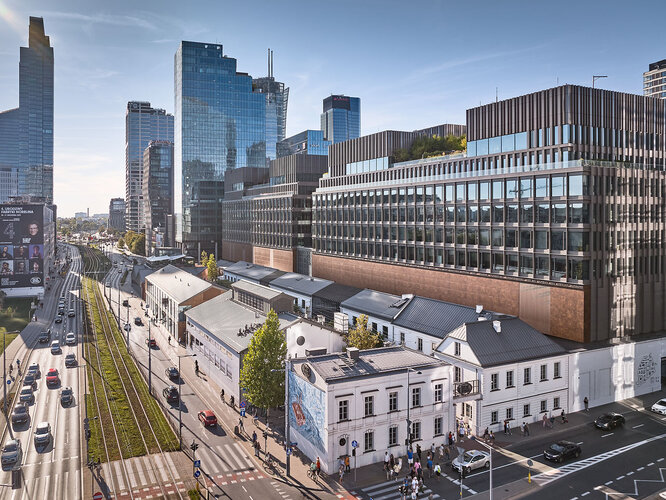
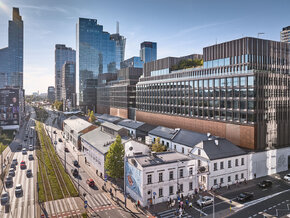
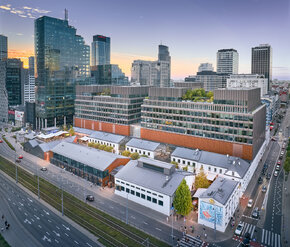
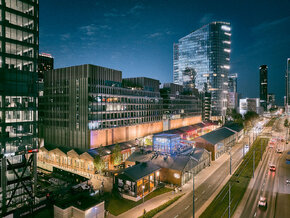
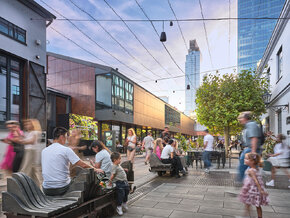
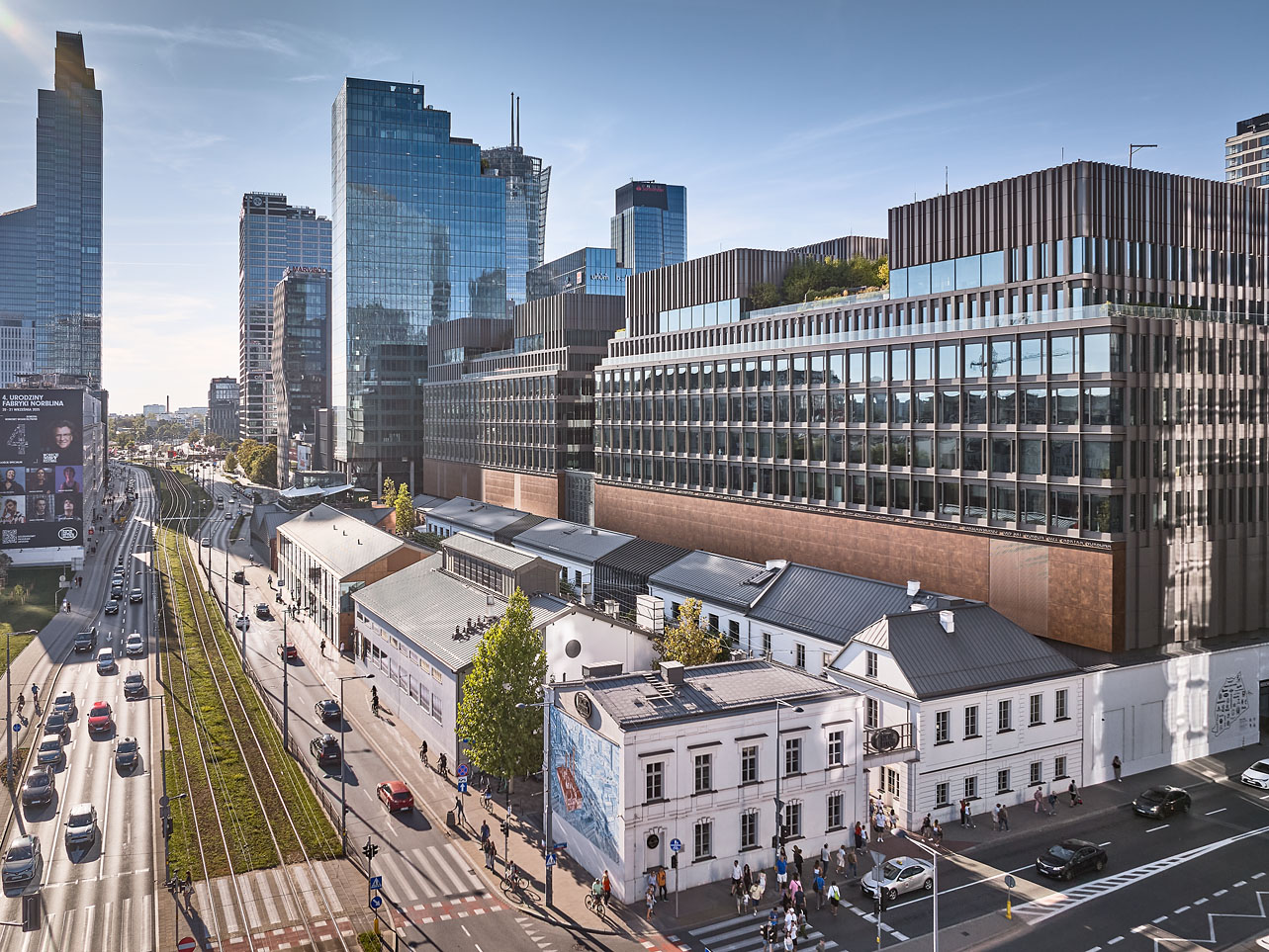
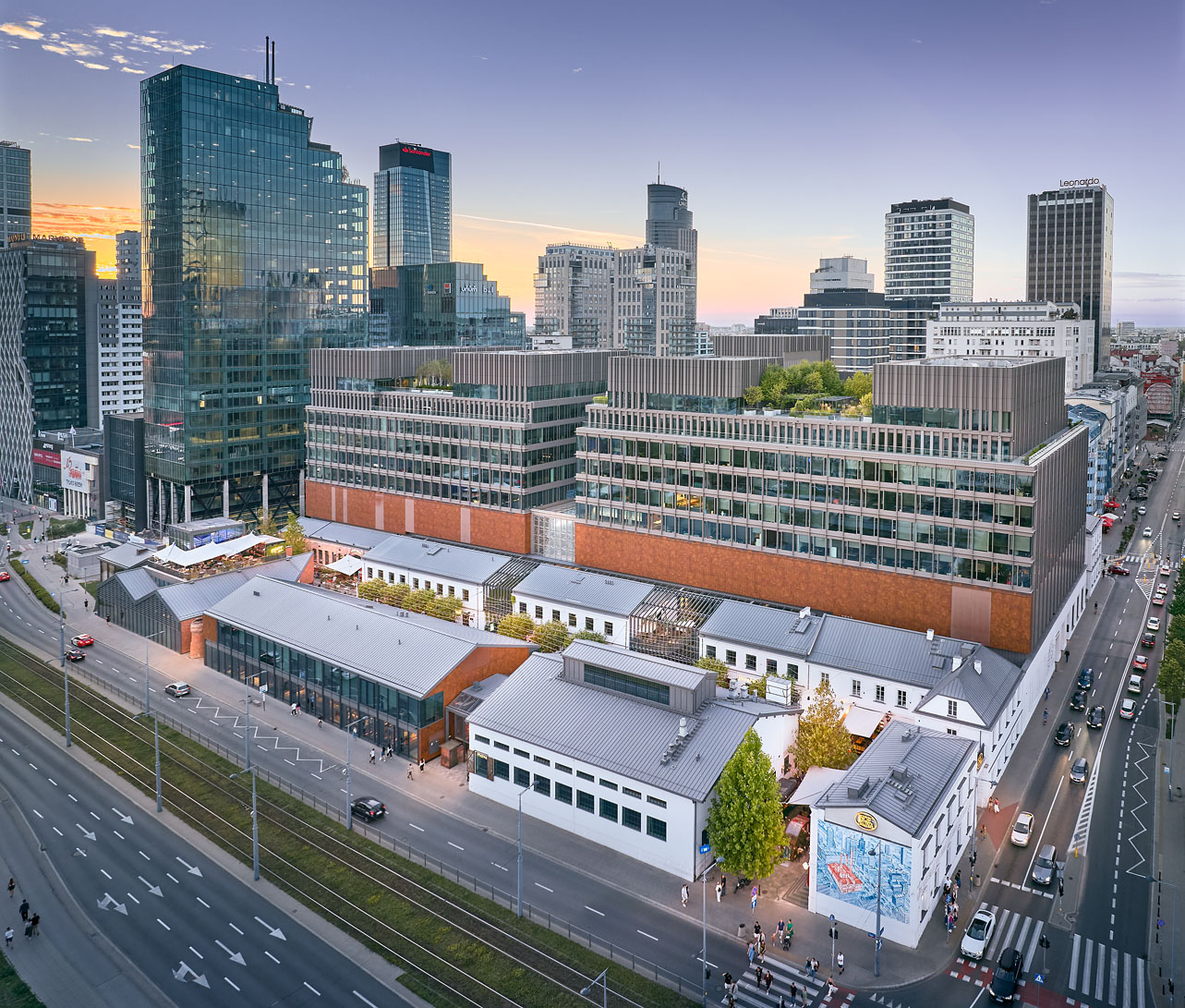
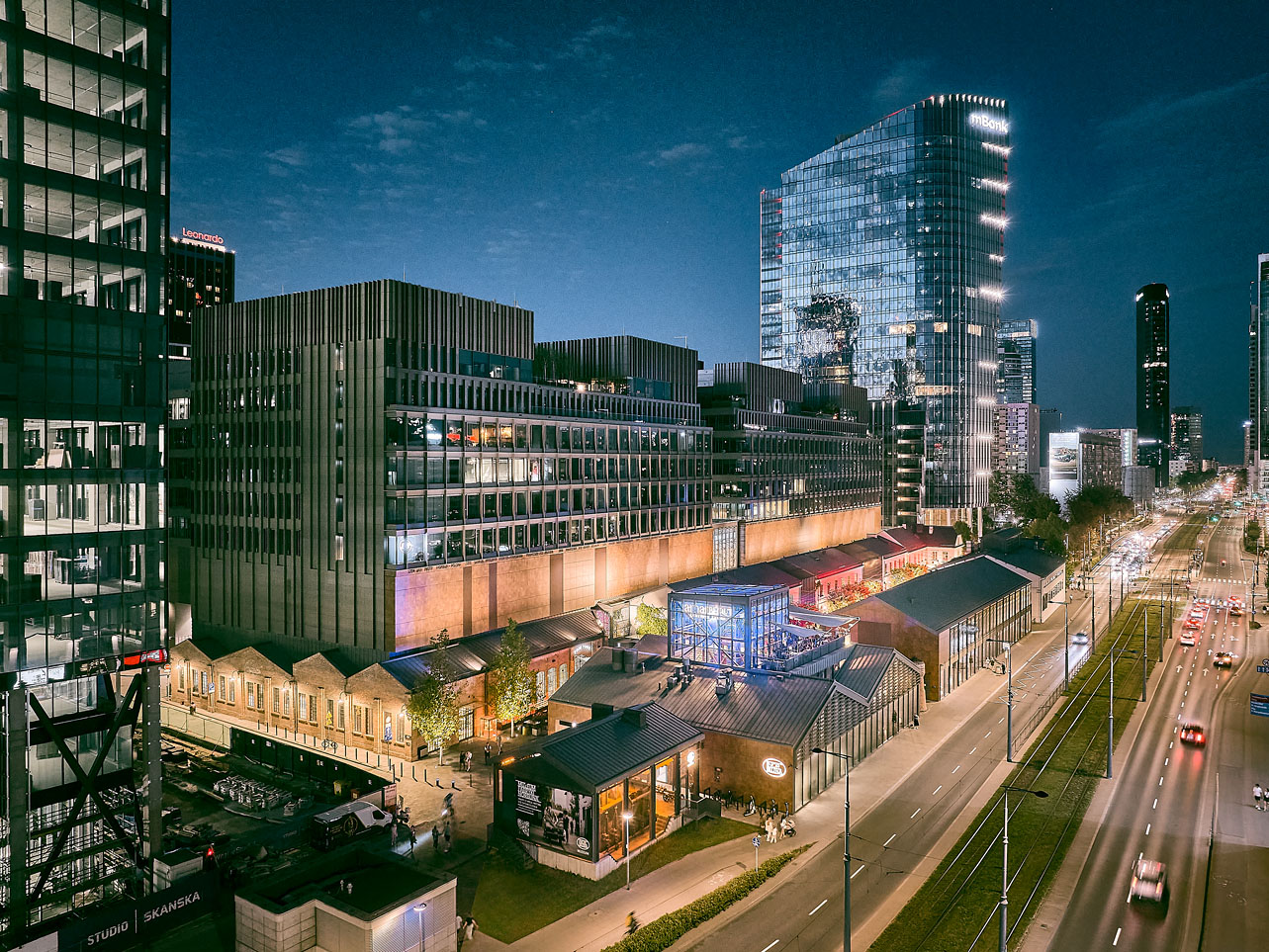
In September 2021, following 46 months of construction and regeneration, Norblin Factory reopened its doors to Warsaw. Today, this mixed-use complex, part of the Capital Park Group’s portfolio, is fully let and combines over 41,000 sq m of office space with nearly 24,000 sq m dedicated to dining, entertainment, retail, services and culture. It attracts around half a million visitors every month.
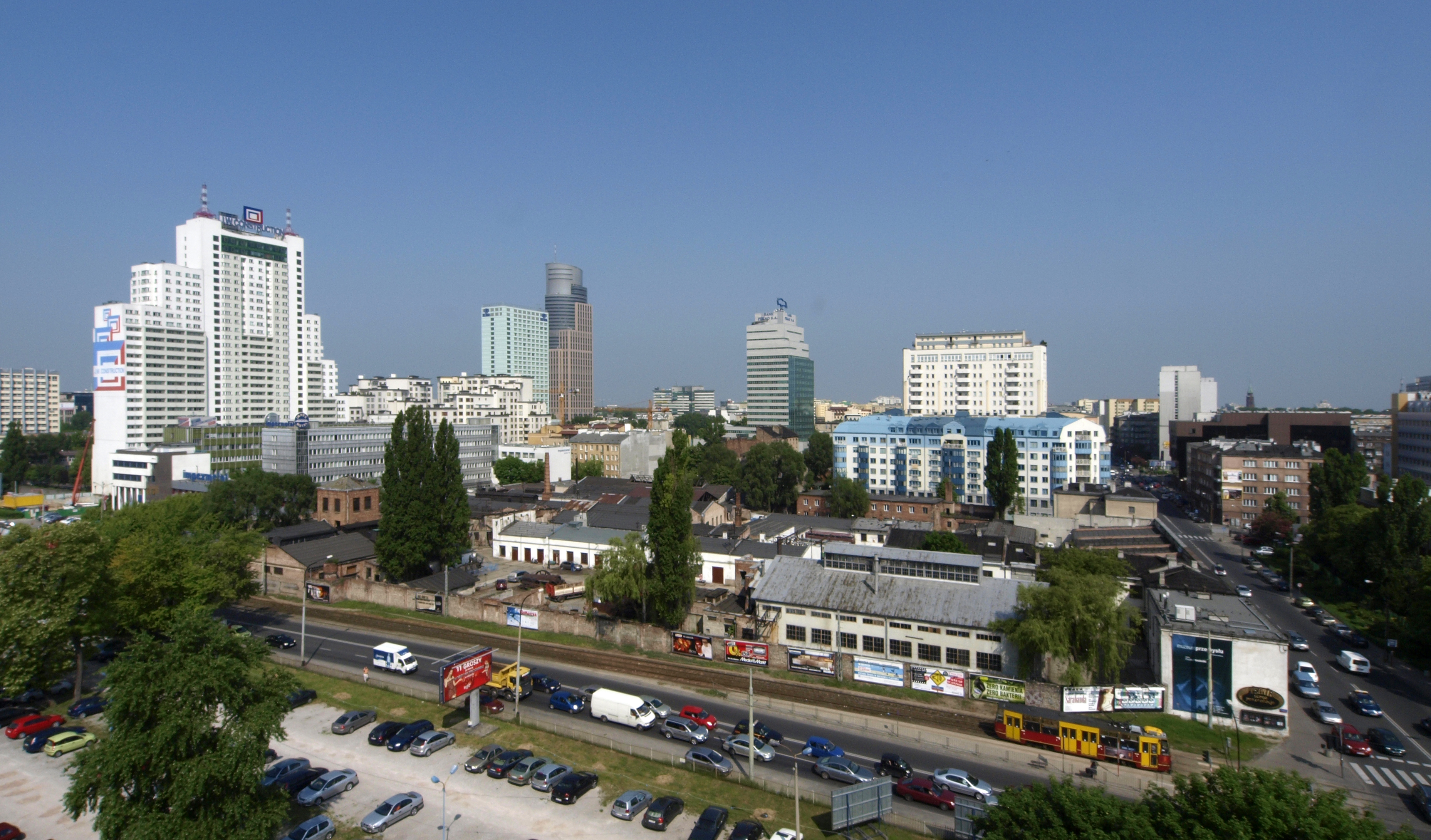
The history of the modern Norblin Factory began in 2008 when the Capital Park Group purchased a plot on Żelazna Street, embarking on one of the most challenging regeneration projects in its portfolio. The following years were taken up with design work, obtaining planning permission and reaching agreements with the historic preservation authority. Construction began in November 2017, and after 46 months of work, the complex was granted a certificate of occupancy. In September 2021, Norblin Factory opened its doors to residents and visitors to the capital.
– For me, Norblin Factory is a project that has come of age – 13 years passed from the purchase of the property to its opening, and today we have another five years of the complex’s operation behind us. In the light of these experiences, we can see that in a mixed-use project, creating the right tenant mix is only the beginning. The real challenge lies in the subsequent active management of numerous functions that operate at different paces and have completely different operational needs. The scale of this work is incomparably greater than in a traditional office project – a good example is the logistics of deliveries for dozens of food&beverage concepts, which must be reconciled with the operation of offices, public spaces and a busy events calendar. Mixed-use therefore does not end with the appropriate design of functions and the signing of tenancy agreements – it is a model requiring continuous, active management of the entire ecosystem,” says Kinga Nowakowska, board member and COO of the Capital Park Group.
Offices let even before construction was complete
From the outset, the office function has been one of the project’s cornerstones. Norblin Factory offers over 41,000 sq m of office space, all of which was let even before the complex was completed. Today, over 3,000 people work here every day. Major tenants include Allegro, Japan Tobacco International, ISS and SEB Bank. Alongside traditional office space, the complex also houses two serviced office concepts – Puzzle Office and Beyond Office – offering flexible spaces for companies and teams with varying needs. The letting of the complex’s other functions took place under different circumstances. The COVID-19 pandemic, which coincided with the final stage of the development, had a significant impact on the commercial property market and slowed down the letting process for retail, service and catering spaces. In the years that followed, the tenant mix at Norblin Factory was consistently developed, and today this part of the complex is also fully let.
Catering and entertainment as part of the business model
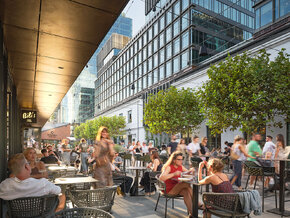
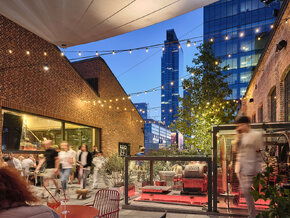
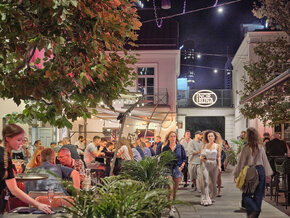
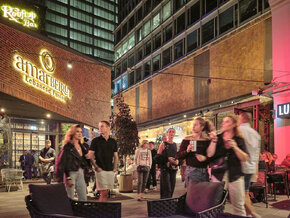
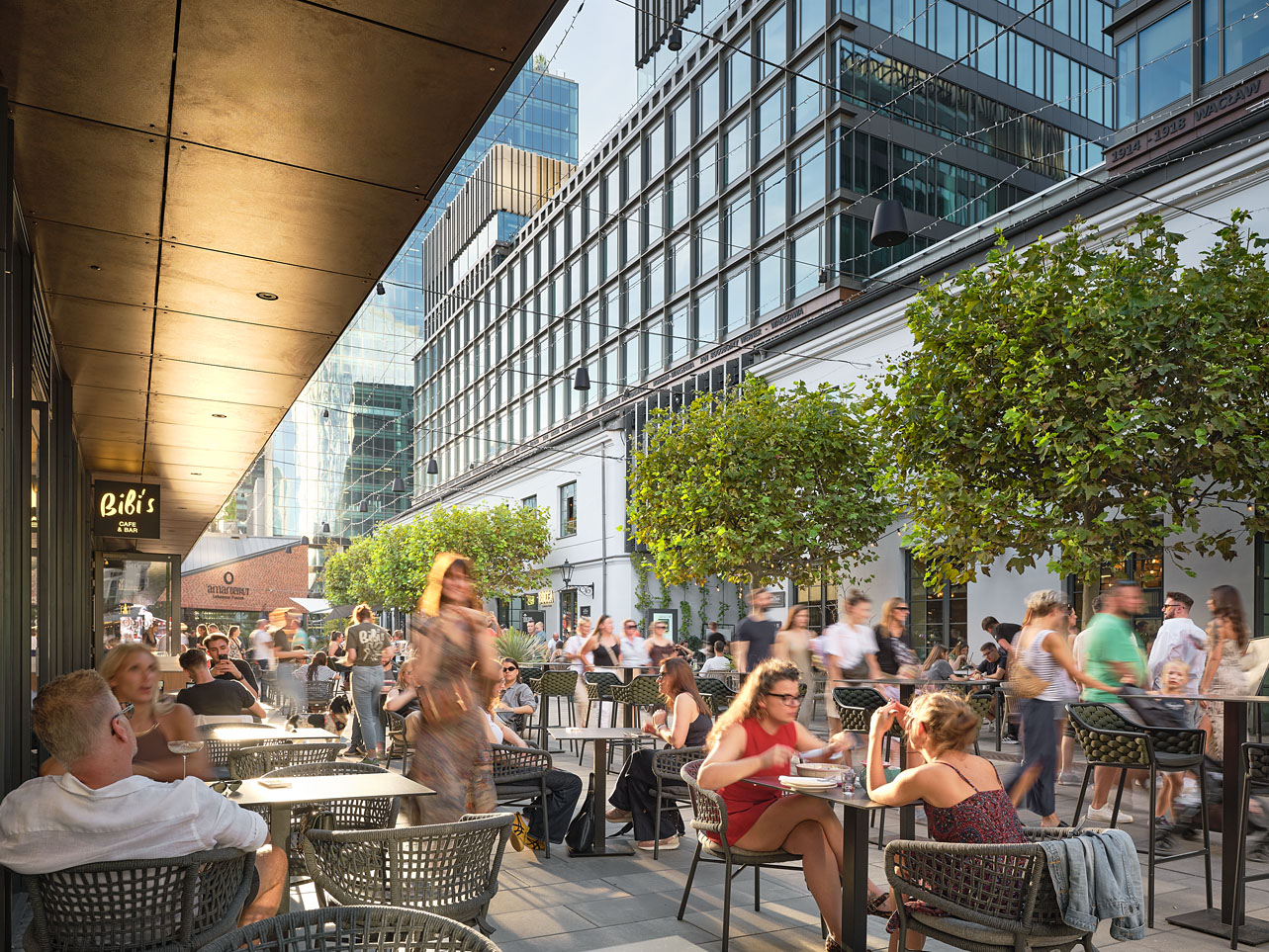
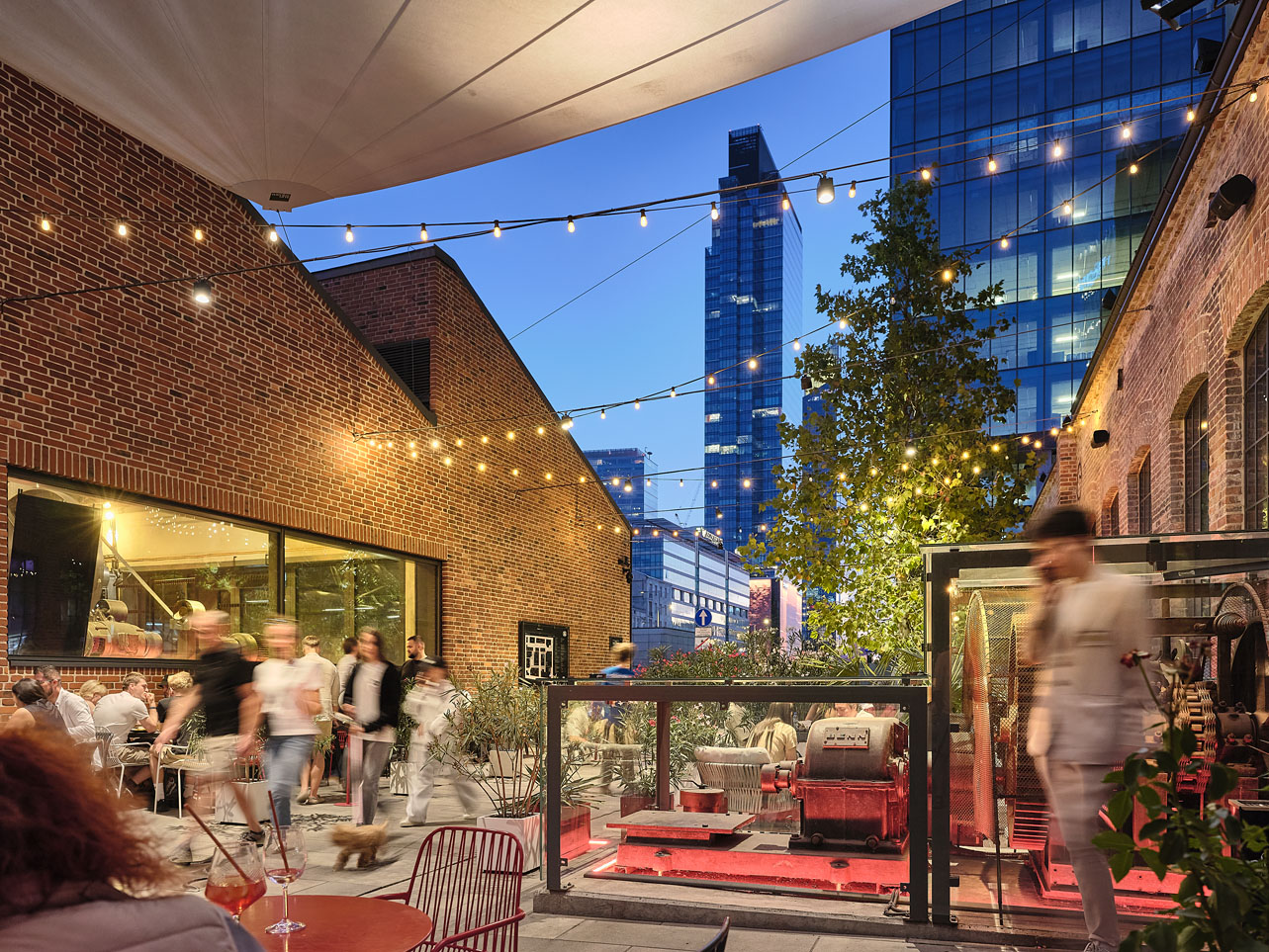
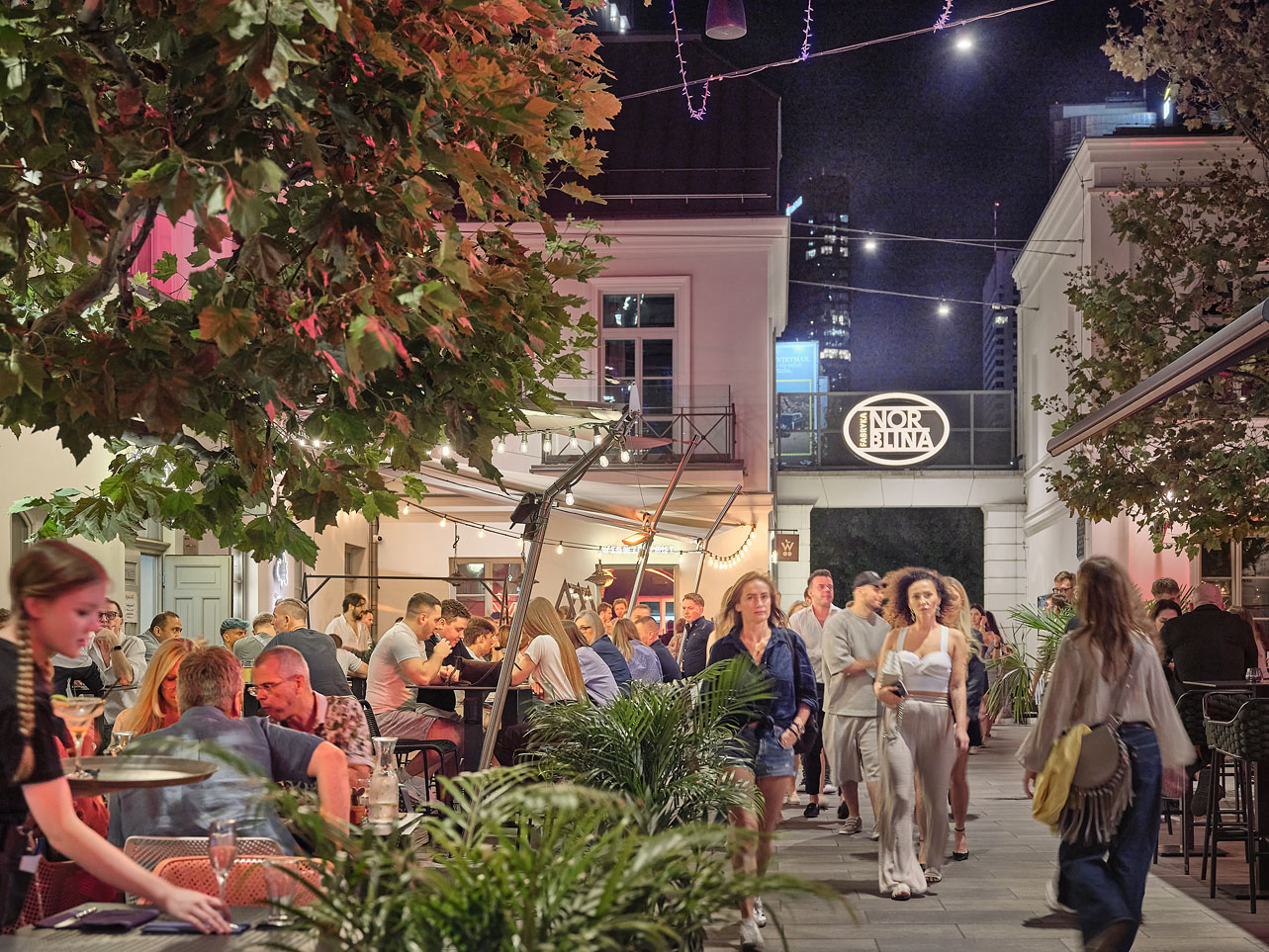
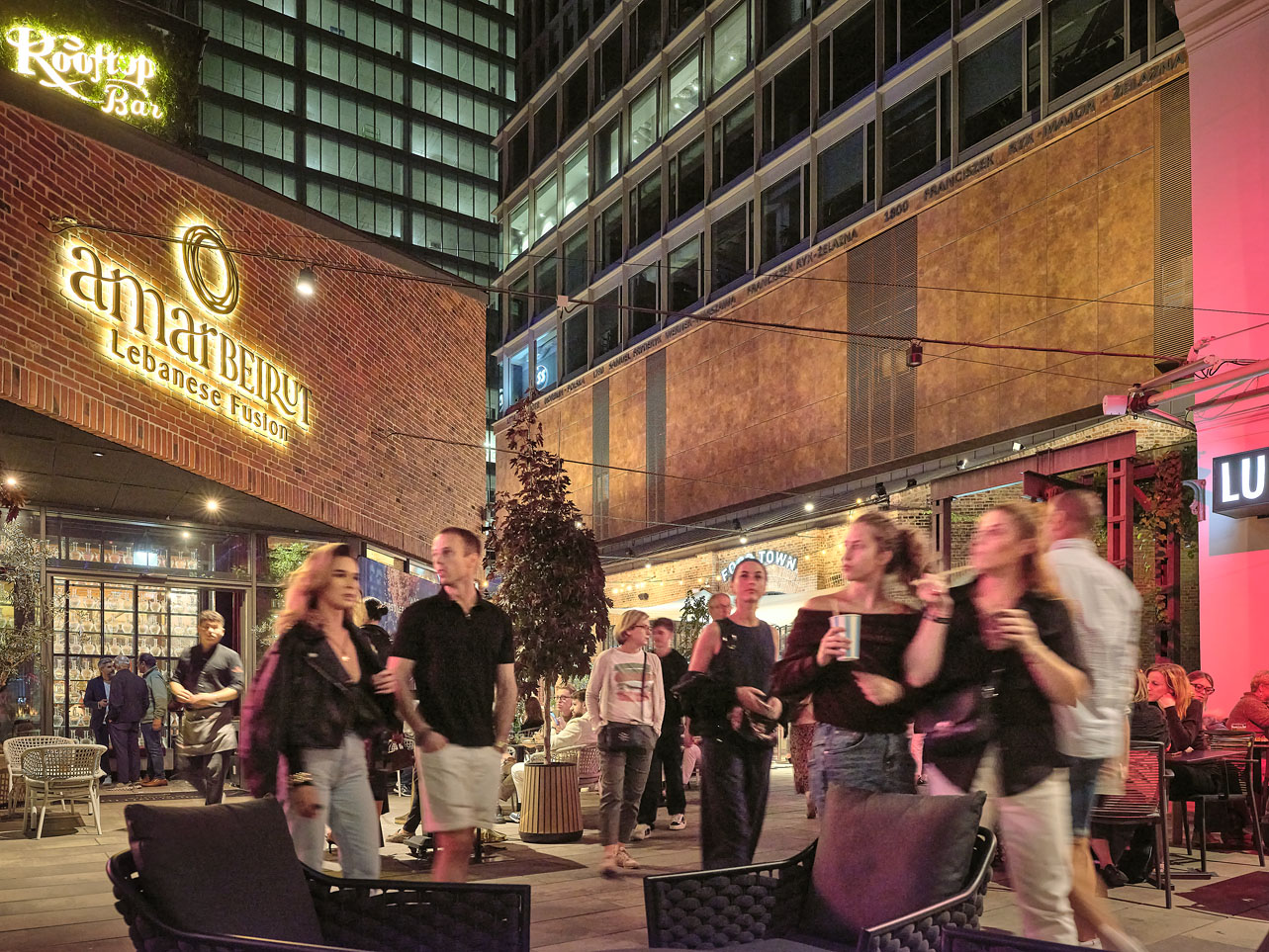
One of the most important elements of the project today is the gastronomy, which attracts a wide range of visitors to Norblin Factory. Nearly 10,000 sq m of space has been allocated to this function, and the offering comprises a total of 38 food concepts. At its heart is Food Town (3,200 sq m), which occupies five historic halls and brings together 24 culinary concepts and five bars. One of the halls is home to Gimlet Live, where entertainment and cultural events are held regularly. In addition to Food Town, the complex’s dining offering is complemented by full-service restaurants and dining-and-entertainment concepts such as the Piano Bar (nearly 400 sq m) with live music, and the MOXO restaurant and music club (1,400 sq m), which boasts the highest bar in Poland, situated in the 19th-century Foundry Hall. The complex also houses the boutique cinema KinoGram with Event Hall (3,500 sq m), BioBazar (2,000 sq m) offering organic products from local suppliers, the interactive Smart Kids Planet centre for children’s educational play (1,600 sq m), and Art Box Experience (800 sq m) – a space for immersive exhibitions and multimedia experiences. It is precisely this diversity of functions – ranging from offices, through dining and retail, to culture, entertainment and education – that was one of the project’s core principles from the outset and has enabled the creation of a space that is alive all day, every day of the week.
The dining and entertainment options are complemented by a range of retail and service outlets. Norblin Factory is home to, amongst others, jewellery and opticians’ shops, service outlets and Poland’s only brick-and-mortar stores for the Answear and PRM brands. Over 2,000 sq m is dedicated to the health and beauty zone, which brings together medical, cosmetology and beauty clinics. The range of health and fitness facilities is further complemented by the new KNOX fitness studio.
Culture and free attractions programme as an integral part of the complex’s operations
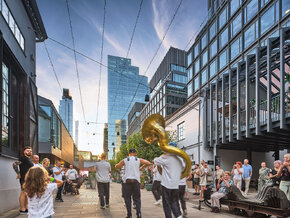
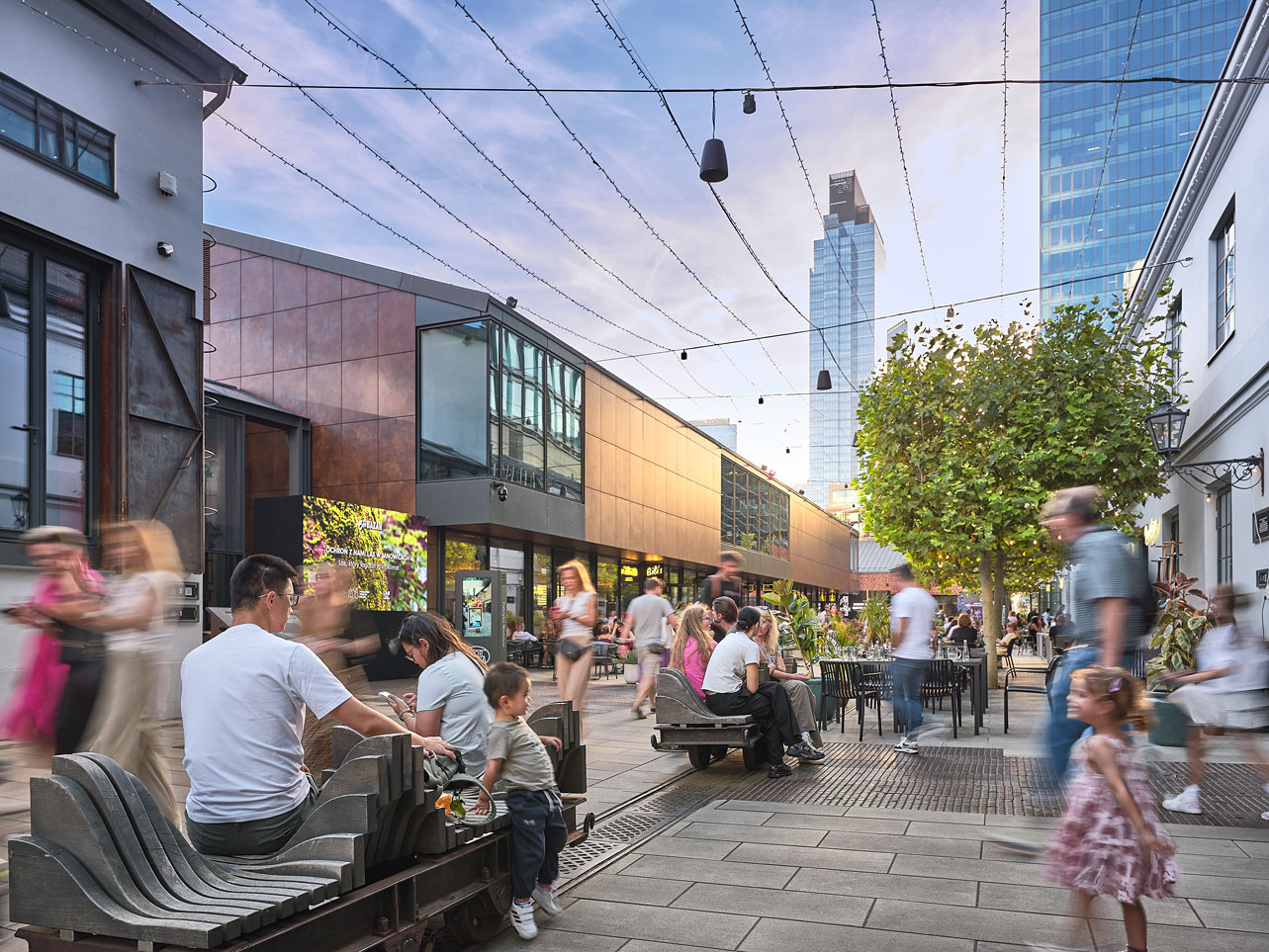
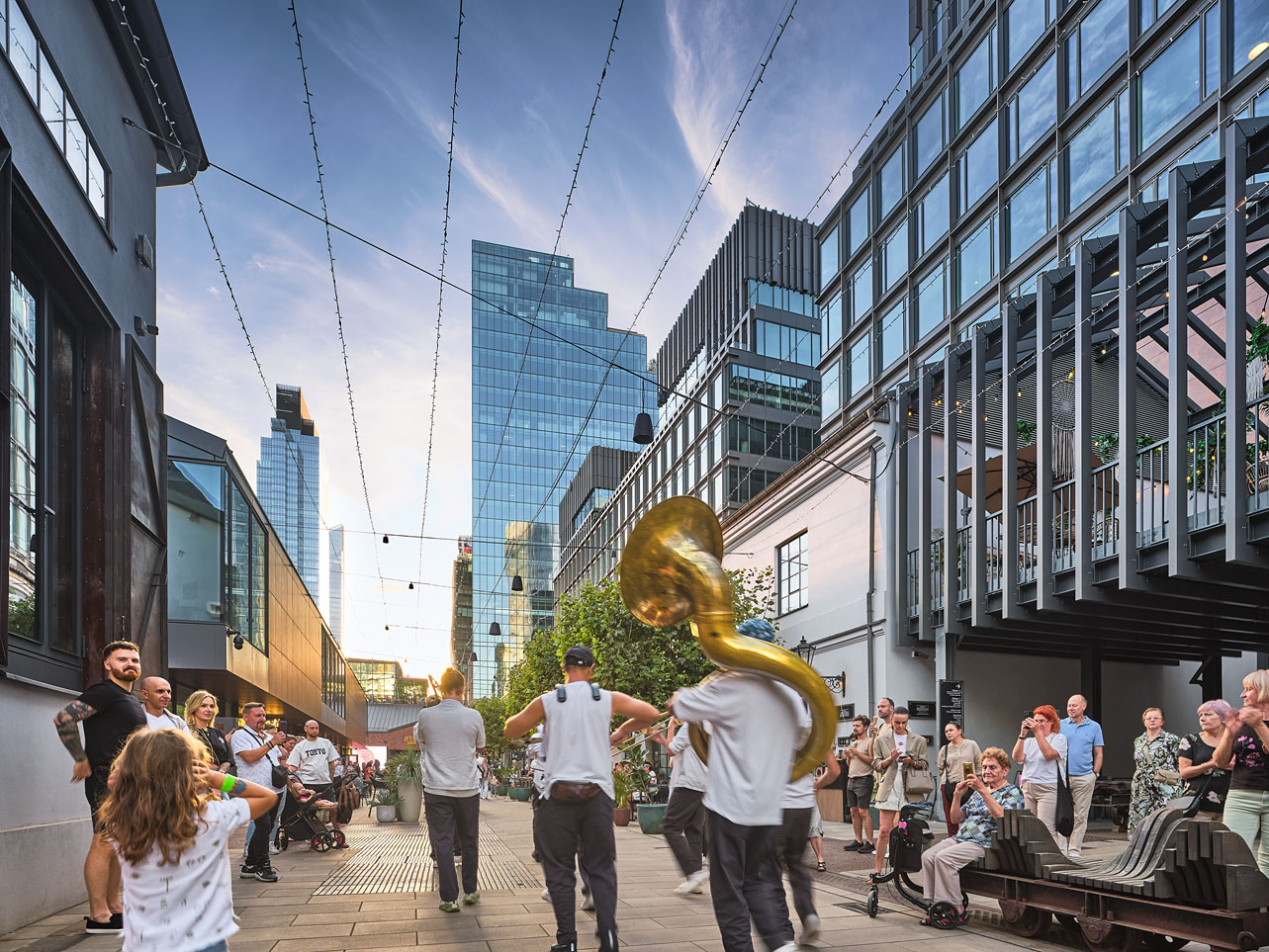
Culture and education have been an integral part of the Norblin Factory from the very beginning. At its heart lies the Norblin Factory Museum, which tells the story of this place’s more than 240-year history and its industrial heritage. The museum comprises 10 historic buildings, nearly 50 machines and pieces of equipment integrated into the complex’s layout, and a collection of over 400 silver-plated items produced in the former workshops; its activities include guided tours, museum lessons and educational events. This historical heritage is complemented by a contemporary cultural programme, much of which is available to visitors free of charge and has been developed since the complex opened, notably by the Norblin Factory Foundation. One of the longest-running events is the Wednesday Jam Sessions – 240 sessions have already taken place since 2021. Meanwhile, since the launch of the Summer Stage in 2022, over 470 music and DJ performances have been organised there. In subsequent years, the programme expanded to include new formats, such as the New City Sounds series, Sunday dance nights, birthday and family events, as well as special projects – symphony concerts, theatre performances and performance art projects. In this way, culture – both that linked to preserving the history of the site and contemporary culture – has become one of the complex’s core functions, alongside offices, catering, retail and services.
Kontakt dla mediów